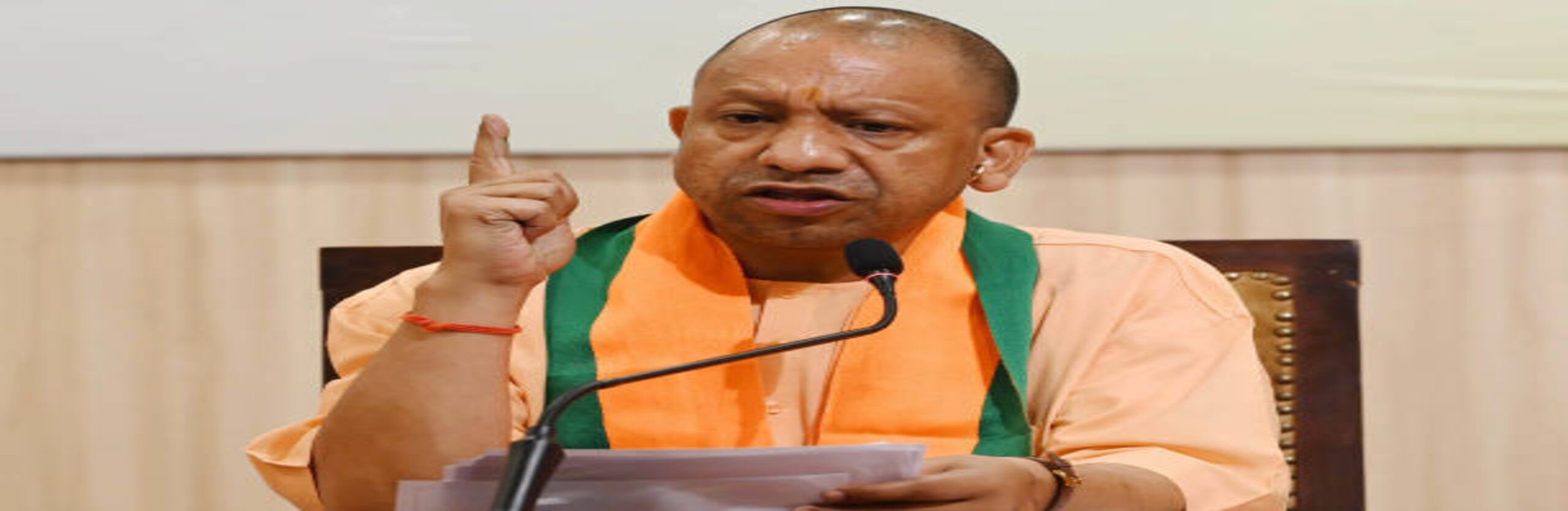
Yogi Adityanath: Life Journey, Education, Spiritual Initiation, and Political Career
Yogi Adityanath’s life journey from a humble Garhwali family to becoming the Chief Minister of Uttar Pradesh and the head of Gorakhnath Math showcases his unique blend of spiritual dedication and political acumen. His administration, highlighted by the ‘Bulldozer Model’, law and order reforms, women’s safety initiatives, and direct-benefit welfare schemes, established him as a firm and decisive leader. Despite facing opposition over communal, legal, and economic issues, his popularity among various social groups continues to shape Uttar Pradesh politics and influence national governance, positioning him as a significant figure in India’s political future.
Part 1: Early Life, Education, and Spiritual Initiation
Yogi Adityanath, widely known today as the Chief Minister of Uttar Pradesh, began his life in a modest Garhwali family. His journey is a blend of spiritual dedication and political vision, reflecting a unique combination of tradition and leadership.
Birth, Family, and Early Life
He was born as Ajay Mohan Singh Bisht on 5 June 1972 in Panchur village, Pauri Garhwal district (currently in Uttarakhand). He belonged to a Garhwali Rajput family. His father, Anand Singh Bisht, served as a forest ranger. Ajay Mohan Singh was the second among seven siblings.
Education
He completed his initial schooling in local schools and later earned a Bachelor’s Degree in Mathematics (B.Sc.) from Hemwati Nandan Bahuguna Garhwal University. His academic background reflects a logical and analytical foundation, which later influenced his approach to administration and governance.
Spiritual Calling and Dedication
In the early 1990s, during the height of the Ram Janmabhoomi Movement, Ajay Mohan Singh Bisht felt a deep attraction toward Hindutva ideology and spiritual life. He decided to renounce worldly pursuits and dedicate himself to a spiritual path.
Initiation and Guru-Disciple Tradition
Around 1993, he came to Gorakhpur and met Mahant Avaidyanath, the then head of Gorakhnath Math. Under Mahant Avaidyanath’s guidance, in 1994, he took Nath Sampraday initiation, adopting the name Yogi Adityanath. The Nath tradition emphasizes Hath Yoga and Shiva worship, and its leader wields significant spiritual and social influence.
Upon Mahant Avaidyanath’s passing in September 2014, Yogi Adityanath became the official successor and Peethadheeshwar of Gorakhnath Math, gaining substantial religious, social, and political influence in Eastern Uttar Pradesh.
Part 2: Political Entry and Gorakhnath Math Legacy
Yogi Adityanath’s entry into politics was a natural extension of Gorakhnath Math’s long-standing politico-religious tradition.
Political Tradition of Gorakhnath Math
The Math has historically held a strong grip in Eastern UP politics. His predecessors, Mahant Digvijaynath and Mahant Avaidyanath, had both served as Members of Parliament, initially associated with the Hindu Mahasabha and later with the BJP. This laid a natural path for Yogi Adityanath into electoral politics.
Electoral Journey
- In 1998, at just 26 years old, Yogi Adityanath won his first Gorakhpur Lok Sabha seat and became the youngest MP of the 12th Lok Sabha.
- He won five consecutive terms (1998, 1999, 2004, 2009, 2014), solidifying his personal popularity and political influence.
Formation of Hindu Yuva Vahini
In 2002, he founded the Hindu Yuva Vahini, a socio-cultural organization to mobilize support and promote Hindutva ideology in the region. While it engaged in community initiatives, it was also involved in controversies, shaping his hardline image.
Relationship with BJP
Although associated with the BJP, Yogi maintained an independent power base through Gorakhnath Math and HYV, occasionally diverging from local and central party decisions. This reinforced his loyalty first to his guru and Math tradition, and then to the party.
Part 3: First Term as Chief Minister (2017–2022) and the ‘Bulldozer Model’
In 2017, Yogi Adityanath became the Chief Minister of Uttar Pradesh, surprising many political analysts. His administration emphasized law and order reforms, including the widely reported ‘Bulldozer Model’, aimed at dismantling organized crime networks and illegally acquired properties.
Key Initiatives
- Closure of illegal slaughterhouses
- Establishment of Anti-Romeo Squads for women’s safety
- Implementation of farm loan waivers
Impact of the ‘Bulldozer Model’
- Delivered instant justice against criminals and mafia
- Strengthened his image as a tough administrator
- Faced criticism over due process violations and alleged targeting of minorities
Part 4: Popularity and Opposition
Pillars of Popularity
- Law & Order and Fear-Free Society: Reduced mafia and crime influence
- Hindu Pride and Cultural Projects: Ram Mandir, Kashi Vishwanath Corridor, Mathura initiatives
- Direct Benefit of Government Schemes: Housing, electricity, expressways, and welfare programs
Reasons for Opposition
- Alleged violation of due process through Bulldozer actions
- Communal and caste tensions exacerbated by political statements
- Criticism over unemployment and inflation
Part 5: Current Influence and National Politics
Current Political Status and Administration
After his second consecutive term win in 2022, Yogi Adityanath consolidated his position as a longest-serving and influential CM of UP.
National Role
- Star campaigner: BJP uses him in state elections where Hindutva and law & order are crucial.
- Potential successor to PM Modi: Seen as a strong candidate due to his firm, Hindutva-oriented, and development-focused leadership.
Challenges Ahead
- Opposition unity in future elections
- Judicial scrutiny over Bulldozer and encounter policies
- Balancing law & order with economic development, employment, and welfare
Conclusion
Yogi Adityanath’s journey from Ajay Mohan Singh Bisht to CM and ‘Bulldozer Baba’ reflects a blend of spiritual grounding, administrative decisiveness, and political strategy. His influence continues to shape Uttar Pradesh politics and plays a crucial role in national governance and the BJP’s future trajectory.


<img src=”images