


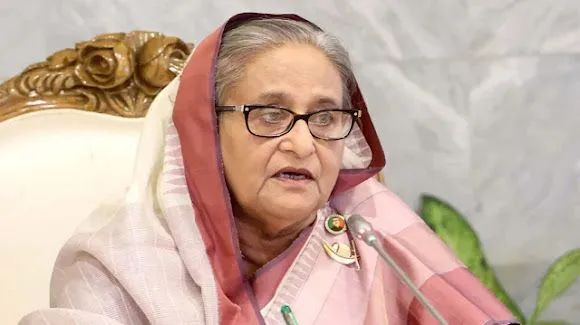
Sheikh Hasina’s life and career have come to a dramatic point where everything changed forever. In November 2025, the Bangladesh International Crimes Tribunal found her guilty of crimes against humanity and sentenced her to death. This verdict shook not only South Asia but also the whole world. This article tells the full story of Sheikh Hasina — her birth, education, political journey, the serious accusations against her, and this historic verdict —
Early Life and Education
Sheikh Hasina was born on September 28, 1947, in the small town of Tungipara in East Bengal, which is now Bangladesh. She is the daughter of Sheikh Mujibur Rahman, the founder and first President of Bangladesh, and her mother was Fazila Tunnesa. Hasina’s early education started in her village. Later, after moving to Dhaka, she continued her studies in a better environment and graduated from Dhaka University in 1973.
Beginning of Political Career
As a college student, Hasina got involved in student politics. During the Bangladesh Liberation War of 1971, her family suffered greatly. Pakistani forces imprisoned her, her mother, sister, and brother. After Bangladesh gained independence, in 1975, a military coup led to the assassination of most of her family, including her father, Sheikh Mujibur Rahman. Despite this tragedy, Hasina began her political journey.
Rise to Premiership
Sheikh Hasina became the Prime Minister of Bangladesh for the first time in 1996 and served until 2001. Then, she returned to power in 2009 and ruled continuously until 2024. She became the longest-serving Bangladeshi Prime Minister and one of the longest-serving female leaders in the world. Known as the ‘Iron Lady’ of Bangladesh, Hasina led many development projects, initiated reforms in education, health, and women’s empowerment, and worked on poverty reduction. However, her tenure was also marked with controversies.
Public Expectations and Growing Discontent
Initially, people expected democracy and growth under Hasina’s leadership. But gradually, her government became more authoritarian with increased human rights abuses, media censorship, and growing economic inequality. The situation escalated in 2024 when students started a peaceful protest demanding quota system reforms in education and jobs. The government’s strict crackdown on these protests caused widespread anger and unrest across the country.
The “Orders to Kill” – Crimes Number 1, 2, and 3
The International Crimes Tribunal found Hasina guilty of three major crimes related to these protests and her governance:
- Inciting Violence Against Protestors: During peaceful protests in July 2024, Hasina was accused of ordering security forces, via harsh public statements and commands on social media, to suppress students violently.
- Mass Killings and Genocide: The tribunal found that Hasina authorized the use of police, Rapid Action Battalion (RAB), and military forces to violently break the protests, resulting in the deaths of hundreds of students and civilians.
- Human Rights Violations and Torture: The court also ruled that protestors and dissenters were subjected to illegal detentions, torture, and other cruel treatments under her orders.
These three crimes together were branded as ‘Orders to Kill’ and she was held directly responsible for them.
Forced to Leave the Country
As public anger grew and political pressure mounted, Hasina resigned as Prime Minister in August 2024. For her safety, she fled to India seeking political asylum.
The Tribunal Verdict and Current Situation
In November 2025, the Bangladesh International Crimes Tribunal sentenced Sheikh Hasina to death for murder, attempted murder, torture, and crimes against humanity. The verdict triggered violent protests in Dhaka and other parts of the country, forcing the government to deploy troops nationwide. Hasina called the trial a political conspiracy, but the court held her accountable as the main architect of these crimes.
FAQ= About Sheikh Hasina
| Question | Answer |
|---|---|
| What is Sheikh Hasina’s father’s name? | Sheikh Mujibur Rahman, founder of Bangladesh. |
| When and where was she born? | September 28, 1947, Tungipara, East Bengal. |
| What is her educational qualification? | Graduate from Dhaka University in 1973. |
| How many times did she serve as Prime Minister? | Five times: first in 1996, then from 2009 to 2024. |
| Why did she leave office? | Due to violence and human rights abuses in 2024 protests leading to public unrest. |
| Which court sentenced her? | Bangladesh International Crimes Tribunal. |
| What were her main charges? | Violence against protestors, crimes against humanity, and murder. |
Conclusion
Sheikh Hasina’s story is one of rise, accomplishment, controversy, and a final tragic fall. Once the most powerful woman in Bangladesh, she now faces the death penalty handed down by her own country’s judiciary, living in exile. This case shows how ignoring democracy and public sentiment can lead to serious crises. The verdict and the events that followed reflect the deep conflicts in Bangladesh’s recent political history.