Nuclear Weapons & Global Security: Can the World Really Survive a Nuclear War?
A Deep Investigative Analysis on the Nations Armed with Nuclear Power — and the Systems Built to Stop Them
Introduction
In a world where international tensions continue to shift like desert winds, one question still stands as the most terrifying and the most ignored:
Are we truly prepared for a nuclear attack?
Seventy-nine years after Hiroshima and Nagasaki, nuclear weapons have evolved into deadlier, faster, and more unpredictable instruments of destruction. Yet, nations continue to produce, modernize, and showcase them as a symbol of ultimate power.
But here’s the real paradox:
the world has invested far more in building nuclear weapons than in building systems to stop them.
This investigation uncovers:
- Which countries actually possess nuclear weapons
- Which nations have advanced defense systems against nuclear strikes
- Whether a nuclear missile can truly be neutralized
- How destructive a modern warhead can be
- And why humanity must now shift from nuclear creation to nuclear prevention
1. How Many Countries Have Nuclear Weapons Today?
As of 2025, the world officially recognizes 9 nuclear-armed nations.
These countries collectively hold over 12,500 nuclear warheads, though only around 3,900 are deployed or ready to launch.
The Nuclear-Weapon Countries (Official + Known)
- United States
- Russia
- China
- France
- United Kingdom
- India
- Pakistan
- Israel (undeclared but widely accepted)
- North Korea
2. How Many Countries Have Nuclear-Defense Systems?
This is where things get dangerous.
Only 4 countries possess advanced anti-nuclear defense systems:
Countries with Strong Nuclear Defense Systems
- United States – Ground-Based Midcourse Defense (GMD), Aegis BMD, THAAD
- Russia – A-135/A-235 Anti-Ballistic Missile System
- Israel – Arrow 3 (one of the most accurate long-range interceptors)
- China – Midcourse missile defense systems (still limited but rapidly expanding)
Countries with Partial or Regional Defense Systems
- India – BMD Phase-1 & Phase-2 (under testing)
- Japan – Aegis + Patriot systems
- South Korea – THAAD + L-SAM development
- NATO Allies – U.S.-controlled missile shields in Europe
Yet, even these systems offer 50–80% protection at best.
A full nuclear strike cannot be completely stopped—not today.
3. Can a Nuclear Missile Be Neutralized?
This is the question humanity hopes the answer to is “yes.”
But reality says something else.
Nuclear Missiles Can Be Intercepted… But Only in Limited Conditions
- Interception works only if the missile is detected early
- Works best during the boost phase (first 3 minutes)
- Harder during midcourse stage (when the missile travels outside the atmosphere)
- Almost impossible during terminal stage (approaching the target)
Modern Nuclear Warheads Make Interception Harder
- MIRVs (Multiple Independently Targetable Reentry Vehicles)
- Hypersonic glide vehicles
- Decoys that confuse radar
- Supersonic speed exceeding Mach 10
➡ Current technology can intercept a few missiles — but not a full-scale nuclear launch.
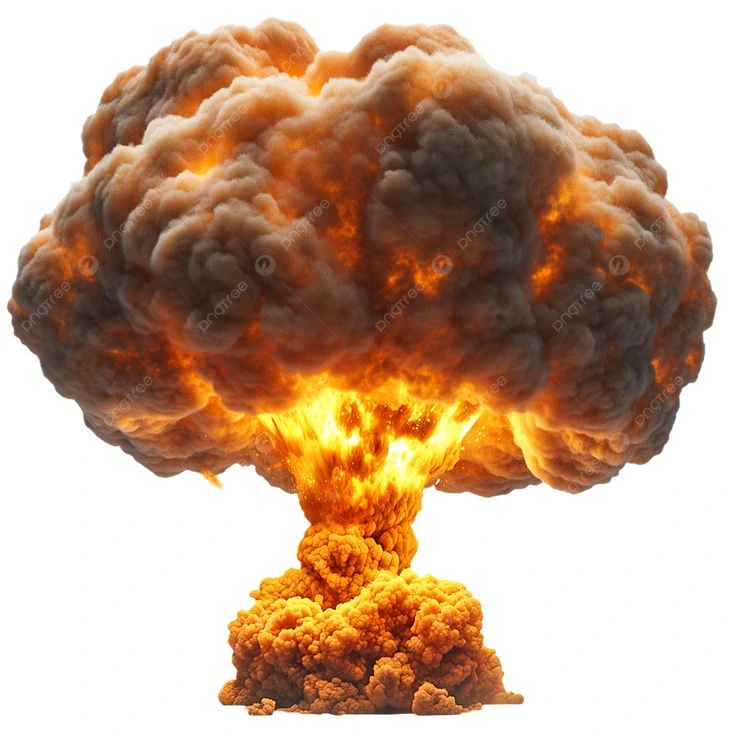
4. How Deadly Is a Nuclear Warhead? (The Real Destruction Radius)
Modern nuclear warheads range from 100 kilotons to 10 megatons.
Destruction Expectation:
If a 1-megaton bomb hits a city:
- Fireball radius: 1.5 km – total disappearance
- Blast damage radius: 5–8 km – concrete destruction
- Radiation radius: 10–15 km
- Fallout impact: Up to 100 km depending on wind
- Long-term cancer risk: Up to 300 km
A single bomb can kill 200,000+ instantly and impact millions.
Now imagine a nation launching 20–30 such warheads at once.
No defense system in the world can stop that.
5. How Many Countries Are Prepared to Protect Their Citizens?
Very few.
Strong civilian nuclear shelters exist in:
- Switzerland (enough bunkers for the entire population)
- Sweden
- Finland
- Israel
- Singapore
Countries like the U.S., Russia, China, India, UK, Pakistan lack full civilian coverage.
Hard Truth:
Most of the world’s population has zero protection against nuclear attack.
6. Should the World Continue Building Nuclear Weapons?
This is where the global debate intensifies.
Pro-Nuclear Argument
- Nuclear weapons prevent big wars (deterrence theory)
- No major world war since 1945
Anti-Nuclear Argument (More Realistic Today)
- One mistake or miscalculation can wipe out entire nations
- AI advancements increase accidental launch risk
- Hypersonic missiles reduce response time
- Nuclear winter can destroy global agriculture
- Billions can starve even if only 1% of nuclear weapons are used
Reality Check:
Humanity is now living on a hair-trigger system.
Every additional nuclear weapon increases the risk of global extinction.
7. Should Nations Focus More on Nuclear Defense Instead of Nuclear Weapons?
Absolutely — and urgently.
Why Nuclear Weapons Are Easier to Build Than Stop
- A nuclear missile costs $50–$100 million
- A missile defense system costs $1–5 billion
- Stopping multiple warheads is technologically near impossible
- But research in defense can save millions of lives
A New Global Strategy Is Needed
- Build shelters
- Deploy global radar networks
- Create AI-powered early-warning systems
- Strengthen anti-hypersonic technology
- International nuclear restraint agreements
- Global no-first-use treaties
8. What Are the Best Technologies to Protect Humanity?
1. Space-Based Infrared Detecting Satellites (SBIRS)
Identify missile launches within seconds.
2. Laser-Based Intercept Systems
Currently under development by U.S. & Israel.
3. Anti-Hypersonic Defense
Still in early testing.
4. Underground Hardened Shelters
5. Decentralized Power and Food Storage
To survive fallout periods.
6. International Nuclear De-escalation Hotlines
Instant diplomatic communication.
Conclusion: Humanity Needs Protection, Not More Nuclear Weapons
Nuclear weapons may have prevented wars — but they also created a world that is one mistake away from irreversible destruction.
The truth is simple:
A nuclear war cannot be won.
And therefore, it must never be fought.
If the world must survive the next century, global priority must shift from building weapons to building protection systems.
Technology may evolve — but life does not get a second chance.
Frequently Asked Questions (FAQ)
1. How many countries in the world currently have nuclear weapons?
As of 2025, nine countries possess nuclear weapons: the United States, Russia, China, France, the United Kingdom, India, Pakistan, Israel (undeclared), and North Korea. Together they hold more than 12,500 nuclear warheads.
2. Which countries have nuclear-defense systems to stop a nuclear missile?
Only a few nations have advanced nuclear-defense shields. The strongest systems exist in the United States, Russia, Israel, and China. Countries like India, Japan, and South Korea have partial or developing interception systems but not complete nationwide protection.
3. Can a nuclear missile actually be intercepted or destroyed in the air?
Yes, but only under specific conditions. Modern missile defense can intercept a few incoming missiles, especially during the early boost phase. However, fully stopping a large-scale nuclear attack is almost impossible with current technology.
4. How powerful is a nuclear warhead today compared to older bombs?
Modern nuclear warheads are far more advanced and significantly more destructive. A single one-megaton warhead can destroy several kilometers in seconds, create massive radiation zones, and affect areas hundreds of kilometers away through fallout.
5. What would happen if a nuclear bomb were dropped on a major city?
A nuclear strike would cause instant destruction, massive fires, long-term radiation poisoning, and severe environmental contamination. Millions could be impacted through direct blast, radiation, and fallout. Recovery could take decades or become impossible.
6. Do any countries have shelters or prepared systems to protect civilians from a nuclear attack?
Only a handful of nations are well-prepared. Switzerland, Finland, Sweden, Israel, and Singapore have strong civilian protection systems and underground shelters. Most countries, including the world’s major powers, lack full public readiness.
7. Why do countries continue building nuclear weapons instead of focusing on defense systems?
Nuclear weapons are seen as symbols of power and national security. They are easier and cheaper to produce compared to building a complete missile-defense network. However, this imbalance increases global risk, especially as technology evolves.
8. Can hypersonic missiles be stopped by today’s defense systems?
Hypersonic weapons travel much faster and maneuver unpredictably, making them extremely difficult to intercept. Defense systems are still catching up, and full protection against hypersonic weapons does not yet exist.
9. What is nuclear fallout and how far can it travel?
Fallout refers to radioactive particles that spread after a nuclear explosion. With strong winds, fallout can travel hundreds of kilometers, contaminating soil, water, crops, and air. The long-term health impact can last decades.
10. How long does radiation stay in the environment after a nuclear explosion?
Radiation levels decrease over time, but some radioactive isotopes remain dangerous for years or even centuries. Cleanup and recovery depend on the size of the explosion and environmental factors.
11. Is it possible for the world to eliminate nuclear weapons completely?
Technically yes, but politically extremely difficult. Nuclear disarmament requires global trust, verifiable agreements, and strong international cooperation—conditions that are still unstable in today’s geopolitical climate.
12. Are nuclear weapons the biggest threat to global humanity today?
Many experts believe so. With hypersonic missiles, AI-driven systems, and unpredictable conflicts, a single miscalculation could trigger a chain reaction leading to a global catastrophe.
13. Should countries invest more in nuclear defense rather than new weapons?
Absolutely. Strengthening missile-defense technology, early warning systems, and civilian protection is far more beneficial for global security. Humanity needs better protection, not more destructive weapons.
14. Can underground bunkers really protect people from a nuclear blast?
Bunkers can protect against radiation, blast waves, and fallout—if they are properly built and located far enough from ground zero. Nations like Switzerland and Finland have some of the world’s most effective shelter networks.
15. What should ordinary people do during a nuclear emergency?
Seek shelter immediately, preferably underground or inside concrete structures. Stay away from windows, seal rooms if possible, and follow government or emergency broadcast instructions. Avoid going outside until radiation levels drop.