Bangladesh & Nepal — The Overnight Political Earthquakes
The sudden political collapses in Bangladesh (2024) and Nepal (2025) shocked the world, as youth-led protests turned into nationwide movements overnight. Triggered by job quota reforms in Bangladesh and a social media ban in Nepal, both crises exposed deep-rooted unemployment, corruption, and lack of trust in institutions. These events highlight urgent global lessons on governance, youth engagement, and democratic accountability.
Explore More Articles:
- NATO, Russia & China Military Analysis 2025
- India & Russia IL-100/IL-76 Collaboration
- Charlie Kirk: Birth to Impact
- Charlie Kirk: Assassination & America Impact
- Video Trends 2025: Global Insights
- Best Countries for Higher Education 2025
- Narendra Modi: Birthday & Achievements
- America Overview: USA Facts & History
- Vladimir Putin: Biography & Global Influence
- Germany 2025: Politics, Economy & Sports
- Australia 2025: Tourism, Cricket & Education
- Thailand Cave Rescue: Miracle Story
- Mona Lisa: Mystery, Theft & Legacy
- Mona Lisa History in Hindi
Click any link to explore related posts & enhance your reading experience!
Friends, imagine this: a country that looks normal one day suddenly turns into chaos the next. Smoke fills the air, government buildings are set on fire, people run to save their lives, and the leaders who once looked untouchable are forced to escape their own nations overnight.
Yes, this is exactly what we saw first in Bangladesh, and then shortly after in Nepal. Both nations went through sudden political earthquakes that shocked not just their people but the entire world.
Bangladesh — How the Storm Began
Let’s start with Bangladesh.
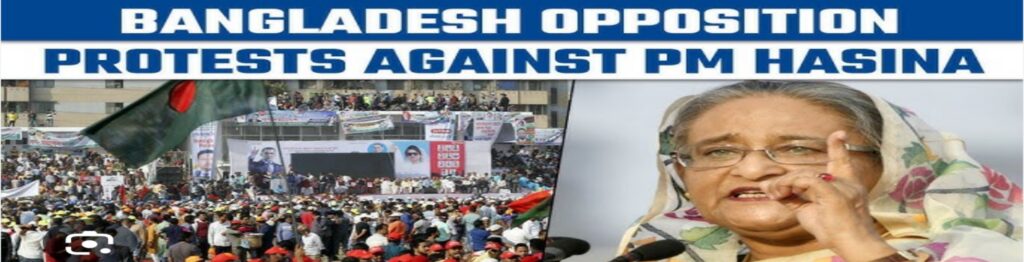
In 2024, frustration among students began to rise. The trigger? The government’s decision on job quota reforms. For the youth, this was not just a policy change — it was a direct attack on their dreams of securing fair opportunities.
At first, the protests were peaceful. Students marched with slogans, demanding justice. But instead of dialogue, the government responded with force. Security clashes broke out, arrests were made, and violence escalated.
Then came the historic day — August 5, 2024. On this day, the political ground of Bangladesh shook. The situation spiraled so fast that Prime Minister Sheikh Hasina, who had ruled the nation for decades, was forced to step down and flee the country.
Think about it — a leader so powerful, suddenly leaving everything behind in a single night. The streets were burning, lives were lost, and the people’s anger turned into something unstoppable.
Nepal — The Next Shock
Now, let’s move to Nepal.
This nation has always faced political instability — shifting between monarchy, democracy, and fragile coalitions. But in September 2025, things reached a breaking point.
The government announced a sudden ban on social media platforms. For the youth of today, social media is not just entertainment — it is their voice, their stage, their tool to unite. The ban felt like a direct attempt to silence them.
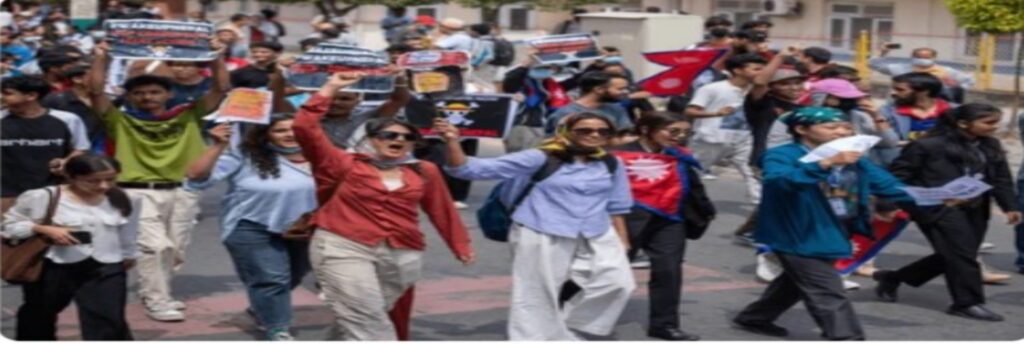
Within days, the streets filled with protesters. On September 8–9, 2025, violence erupted. Police clashed with demonstrators, parliament buildings were attacked, and fires were set. Reports said that at least 20 people lost their lives and hundreds were injured.
By the end of this chaos, Prime Minister K.P. Sharma Oli had no choice but to resign. And just like Bangladesh, Nepal too witnessed a sudden collapse of authority.
Why Did This Happen in Both Nations?
The core reasons were surprisingly similar:
- Youth Anger: Rising unemployment, inflation, and lack of opportunities pushed young people to the edge.
- Government Stubbornness: Instead of listening, leaders made harsh decisions and failed to communicate with their people.
- Role of Social Media: In Bangladesh, it fueled the protests; in Nepal, the attempt to ban it became the very reason people exploded in anger.
- Collapse of Trust: When people lose faith in courts, media, and institutions, they no longer wait — they take their fight to the streets.
How Did Power Change Overnight?
Some might ask, “How can such big changes happen so quickly?” The truth is, these overnight changes are never sudden. Years of frustration and broken promises keep piling up like dry wood. All it needs is one spark.
In Bangladesh, that spark was job quota reforms.
In Nepal, it was the social media ban.
And when the spark comes, the fire spreads faster than anyone can control.
What Can Be Learned — The Road Ahead
The question is — can stable governments rise again in these countries? The answer is yes, but only if they act wisely.
Jobs for the youth: Real employment and skill-building programs must be created.
Dialogue, not force: Governments must talk to their people instead of silencing them.
Protecting human rights: Police and army must follow democratic principles and avoid violent crackdowns.
Smart use of social media: Instead of bans, governments should build transparency and work with digital platforms.
A Warning to the World
Friends, the stories of Bangladesh and Nepal are not just local issues. They are a warning to the entire world.
Today’s young generation will not stay silent. If unemployment, corruption, and suppression grow unchecked, they will rise. And when they rise, no power, no government, no leader — no matter how strong — can survive.
That is why world leaders must start thinking today. They must create policies that are fair, inclusive, and responsive to their people’s needs. Otherwise, what happened in Bangladesh and Nepal can happen anywhere — maybe even sooner than we expect.
Nepal Protest & Tragedy – Simple FAQ
- Why did the protest start?
The protest started because the Nepal government blocked many social media apps like Facebook, WhatsApp, YouTube, and Twitter. Young people (called Gen Z) were already angry about corruption, unfair rules, and lack of jobs. The ban made them come out on the streets. - When and where did it happen?
The big protest happened on 8 September 2025 in Kathmandu, near the Parliament area. Protests also happened in other cities. - What happened during the protest?
Thousands of young people marched with slogans like “Stop corruption, don’t stop social media.”
Police tried to stop them using tear gas, rubber bullets, water cannons, and even real bullets.
Some protesters tried to enter restricted areas, and some buildings were damaged.
- How many people died or got hurt?
At first, news said around 19 people died and more than 100 were injured.
Later reports showed over 70 people died and more than 2,000 were hurt.
- Did the police really use live bullets?
Yes. Forensic reports showed that many protesters were shot with real bullets in the chest and head. - What did the government do?
The government quickly removed the social media ban after the protest.
They declared curfews in Kathmandu.
They set up a special investigation team to check who was responsible for the violence.
- What happened to leaders?
Prime Minister K.P. Sharma Oli resigned.
The Home Minister also resigned.
- What do people want now?
Justice for those who died.
Punishment for officials who ordered shooting.
Less corruption, more jobs, and fair rules.
- What do other countries say?
The United Nations and human rights groups are very worried. They say the government should not use bullets on peaceful protesters. - What will happen next?
The investigation team will give a report.
New leaders may come with new rules.
People hope corruption will reduce, and youth will get more chances in the future.
👉 And that, in my words, is the full story — from Bangladesh to Nepal, two nations that changed overnight, and the lessons the whole world must learn before it is too late.